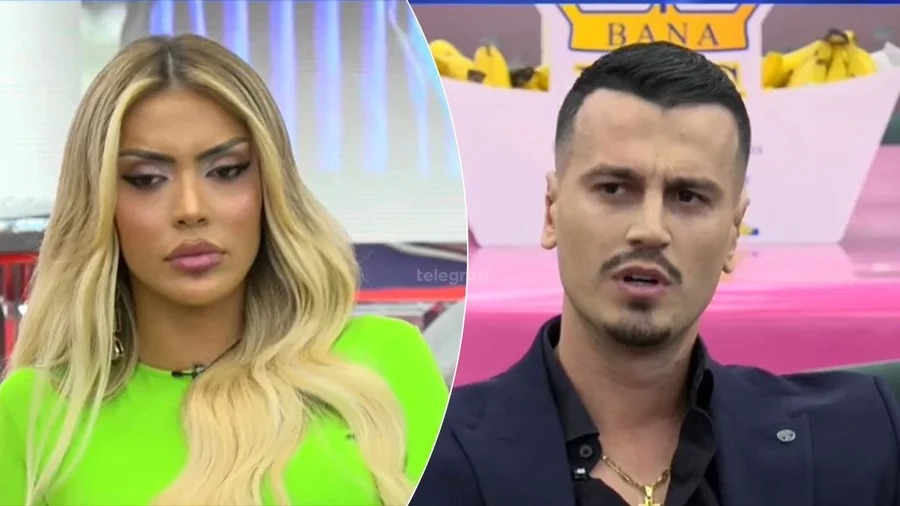
Let's say it from the beginning, to be fair to the end: Mateo, from what we see on screen, is a good guy. Generally calm, polite most of the time, well-mannered with those he has friends, without outbursts and without aggression. This is precisely the reason why the audience finds it so difficult to make a cold analysis of his situation with Brikena. Because when you have a charming guy in front of you, with a well-shaped body, a pleasant smile and eyes that "shine" (eyes that, for the sake of truth, have shone just as well in "Cape of Temptation" and "Për'pathen"), some small but important details easily go unnoticed.
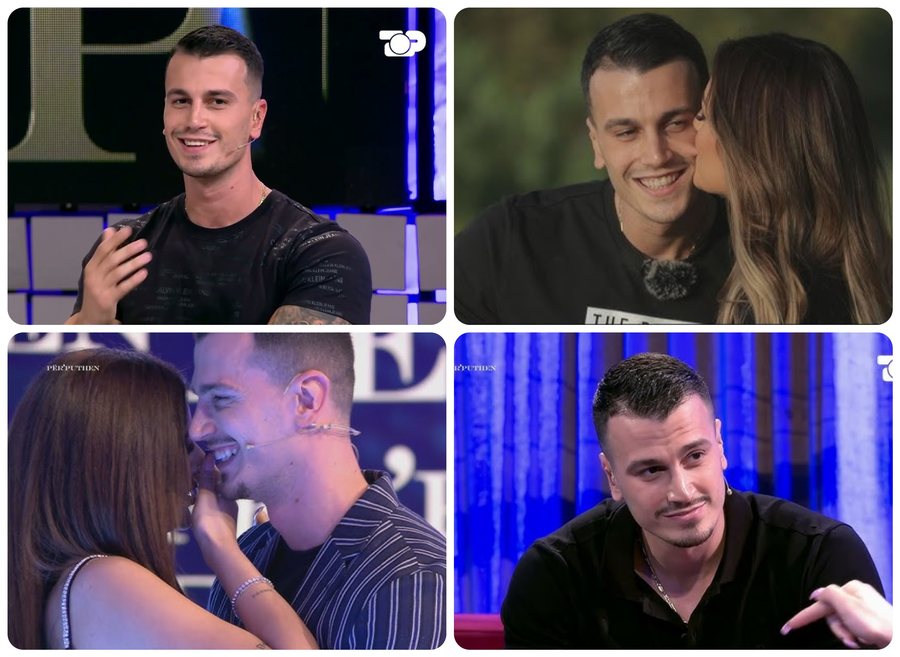
One of the most used justifications is the famous one articulated by the columnist Arbër Hajdari: “he spoke about the former relationship with Brikenë because he was asked”. As if the question were a kind of obligation to confess everything that comes to mind. But every answer by Mateo was a choice and these choices do not seem so random, as long as he chose to talk about a story that had never been documented anywhere, that did not exist on the internet, that had no photos, no videos, no public traces.
This story has an interesting feature: every time the topic is brought up, it gets richer. At first it was “we met.” Then it became “we kissed.” Then it went to “her family forbade us.” And finally it turned into “he has feelings.” The problem is not necessarily whether any of this is true or not. The problem is why the story always gets richer with details when there is an audience. Is the love that sleeps for four years and only awakens when the cameras turn on and Brikena appears on “Big Brother,” really pure love, or just “television love”?
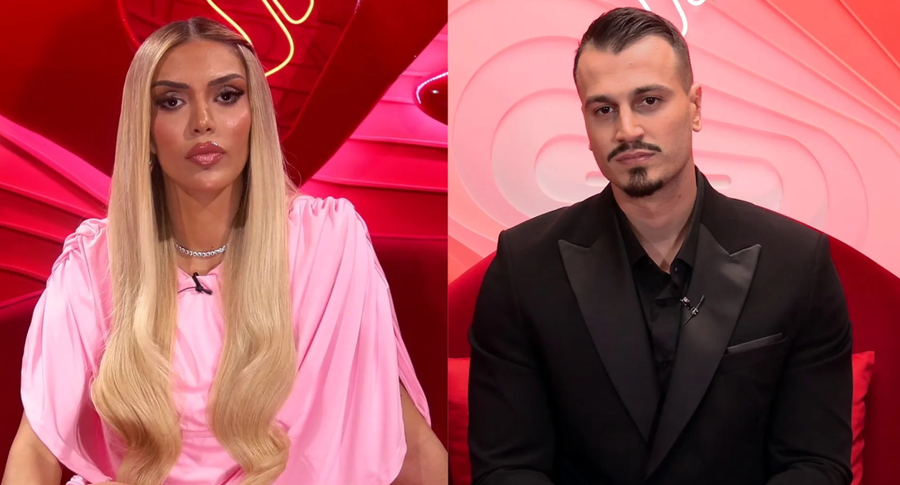
Then comes the part of persistence, which the public has taken very much to heart. Only here the question arises: why didn't this persistence exist four years ago? Why did it settle for a supposed "no" and withdraw? Why do feelings resurface precisely at the moment when Brikena is a television figure in a massively watched format?
And if anyone still has any doubts, just remember the dinner, where Brikena appeared to be significantly more interested in chicken thighs than in Mateo. Two people who allegedly have been talking for months, even a year, and who at one dinner ask about their horoscope sign and the number of siblings. Either they haven't talked as much as they claim, or they have talked, but there has never been any serious relationship between them.
But the most problematic point is the romanticization of rejection. Brikena has been clear, consistent, correctly cold and categorical that she has no interest. However, the audience chooses to read this as “she doesn't understand what the boy is missing”. Even the fact that Mateo apologized to Brikena's mother became material for a romantic video. A humane, correct and necessary gesture was interpreted as proof of deep feelings, while an apology is the ethical minimum and, above all, does not oblige anyone to respond with feelings.
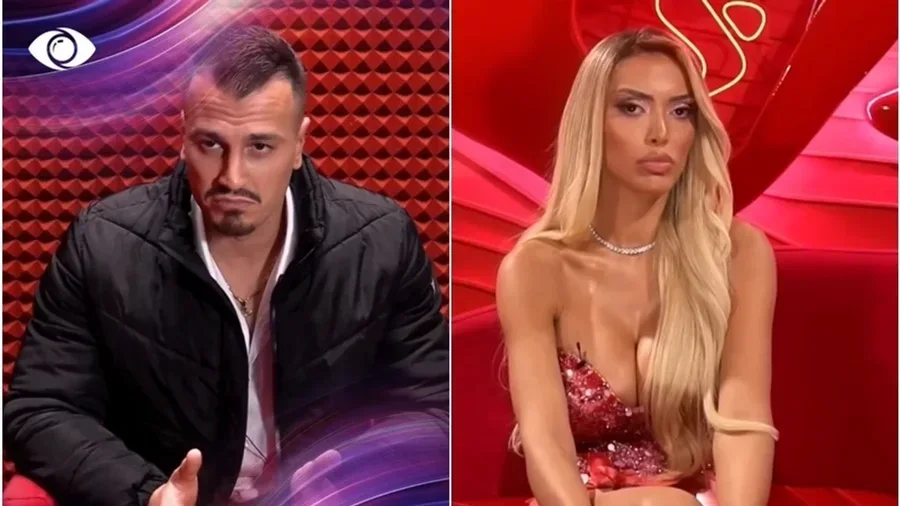
At this point, the red flags in this story are no longer called red flags. They are called “misunderstandings.” Or, even better, “perseverance.” Here are some of them:
First, the disrespect for her decision not to make the story public. A guy who has feelings and understands that a girl doesn't want to make a story public would normally respect that and close the topic. Here, on the contrary, the story was opened, returned, and enriched every time there were premiums.
Second, intimate details that only come out from one side. If a girl denies the kiss, a guy who respects her would leave it at that. But here the kiss became a key element of the story, despite the other party not confirming it.
Third, expanding the story instead of closing it. When a girl makes it clear that she doesn't want to continue, an interested guy either closes the story or keeps it private.
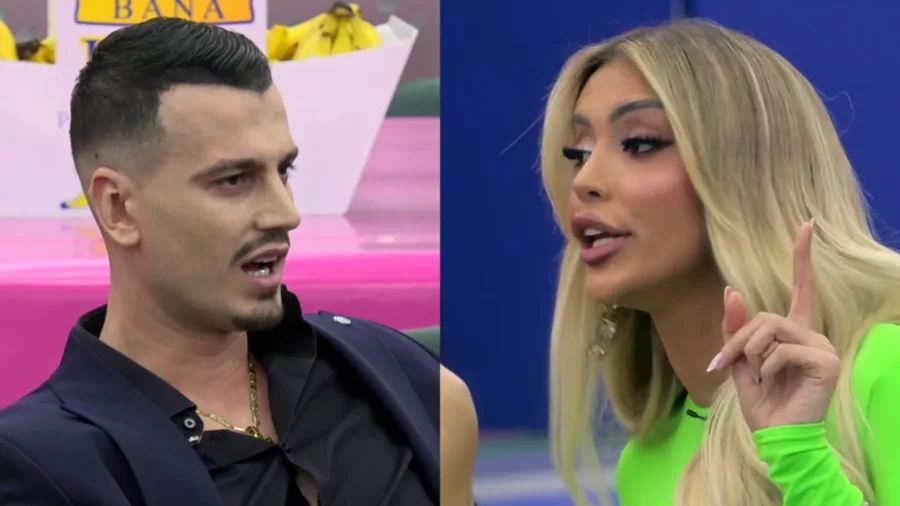
Fourth, the involvement of Brikëna's family without consent. A guy who has feelings usually tries to protect his girl from unnecessary exposure, especially when it comes to family.
Fifth, the claim of feelings without concrete actions off-camera. Feelings are not only shown with sentences like “we met,” “we kissed,” or “I don’t see you like the other girls in here.” They are shown with real actions. Their absence for years makes Mateo’s interest in her seem, at the very least, questionable.
At the end of the day, Mateo really does seem like a good guy. There's no denying that. But being a good guy doesn't mean that every action you take is indisputable, that you're infallible, that every story you tell is automatically true, and, above all, that you can't be rejected. In this story, the problem isn't whether he has feelings. The problem is that Mateo's feelings are being treated as a sufficient argument, while Brikena's "no" is an annoying detail that the audience (and clearly the production, along with the opinionators) choose not to accept for the sake of a more romantic narrative.