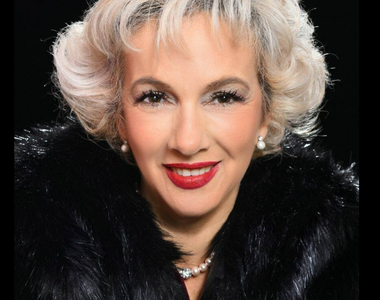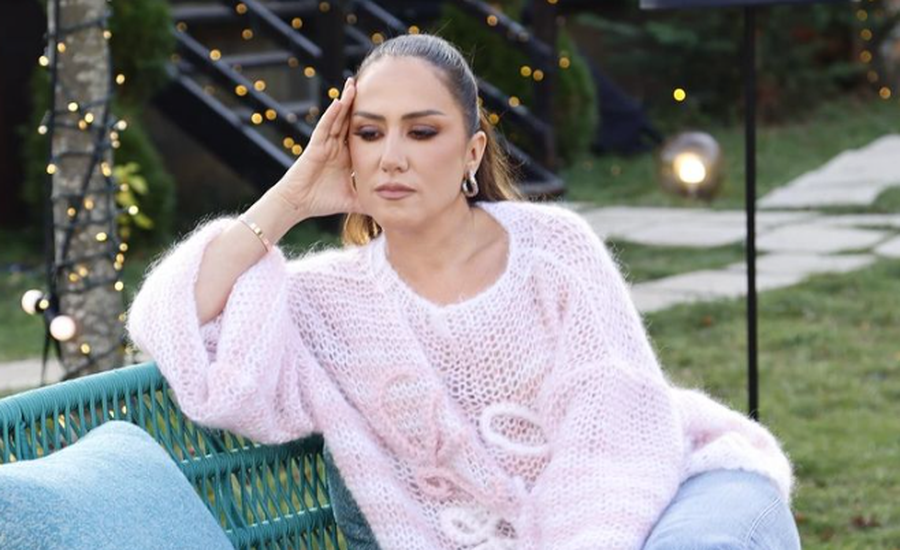
Arbana Osmani's "Mirembrëma Yje" started with a bang not because it was different as a format, but because it was an event: for the first time, Arbana appeared outside the Top Channel logo. The first episode (November 2024) broke viewership records and within 24 hours achieved extraordinary clicks, proving that her personal popularity was real and measurable. At that moment, it seemed as if Arbana had won the "race" with her former television. The narrative was clear: a big name that no longer needs TV to be on the market. However, after the initial enthusiasm, the format quickly began to lose its sensation and the second season, in autumn 2025, failed to maintain the same viewership figures. The question is no longer "does Arbana work outside Top Channel?", but why this format was consumed so quickly.
“Good Morning Stars” was conceived as an intimate and warm conversation, in a homely environment. Arbana welcomed guests “at home”, where they cooked together and shared personal stories. At first, this was perceived as a pleasant approach: a freer, more intimate Arbana, far from the classic television look. But episode after episode, the interview structure became a little predictable. The questions began to repeat themselves, games like “I did it / I didn’t do it” or “choose this or that” began to seem forced and, above all, not in line with Arbana’s figure. When a format does not evolve, it is consumed.
The first season relied heavily on names with great popular weight. The first episode with Ledri Vula and Alban Skënderaj guaranteed maximum attention. Interviews followed that were themselves a big event: Xhensila Myrtezaj who spoke about divorce and childhood trauma; the return of Arian Çani after a long absence; the symbolic confrontation between Arbana and Alketa; rare interviews with Tayna, Ylli Limani, Xhemi Shehu, Eno Popi, Emina Cunmulaj. The first season worked because it combined curiosity, personal stories and the weight of names.
The second season attempted to expand the content. In addition to showbiz figures, Arbana also invited characters from politics, sports and other public spheres: e.g. politician Arlind Qori, writer/former politician Ben Blushi, head of the Albanian Football Federation Armand Duka, footballer Myrto Ozuni, etc. In theory, this enriched the content. In practice, it reduced mass interest. Episodes with football or political themes collected significantly fewer clicks than those with figures from the pink world, showing that the audience of “Mirembrëma Yje” is, in essence, a showbiz audience.
The problems of the second season were not only numerical. The first episode with Prince Leka II and his partner, Blerta Celibashi, was accompanied by strong negative reactions . Many followers criticized the invitation, considering it inappropriate due to the accusations of violence by his ex-wife. The invitation of Fero , also accused of violence by his ex-wife Arbenita, reinforced the perception that the show was serving as a platform for image cleansing for controversial figures.
Other controversies - the episode with Zhakun, Zhaklin Lekatarin and Arjan Konomi and the mocking comments about people not present, the jokes about Elsa Lila or the comparisons between Arbana and Ledion Liço in front of Ben Blushi - shifted the focus from content to noise. Some loyal fans of "Big Brother" even ironized that Arbana was only inviting people who had left Top Channel (one comment read: "Whoever leaves Top, directly secures an interview with Arbana" ). Others suggested that the show was losing creativity: "The guests are no longer as interesting as last year" , "The same formula every time, it became monotonous", were some of the comments that were repeated. The idea that "Mirembrëma Yje" was losing creativity and that the invitations were becoming less and less interesting began to circulate on social networks.
Arbana's move from television to YouTube was the main innovation of "Mirembrëma Yje". At first it worked: the internet (especially the diaspora and youth) responded well, making the first episode viral. YouTube offered freedom of schedule, episodes were published in the evening and fans could watch them immediately or the following days as they wished. The initial advantage was that Arbana had her entire fan base with her, who jumped online to follow her on YouTube. Arbana herself thanked her fans for this online support, while various portals said that she had already won the "race" with Top Channel in the field of clicks. But YouTube is a ruthless platform: it constantly requires engagement , rhythm and reasons to return.
Unlike television, where a prime-time show can catch even casual viewers as they switch channels, on YouTube the audience has to search for you or come across you through the algorithm. Over time, the next episode of “Mirembrëma Yje” was no longer “the news of the day.” Some of those who watched the first episode out of curiosity (e.g. what would Arbana be like outside of Top Channel) may not have continued with subsequent episodes if the content did not appeal to them.
The numbers clearly show this decline: the first season averaged around 650-700 thousand views per episode, with some episodes over 1 million. The second season dropped to around 280-300 thousand views, with no episode surpassing 1 million. Part of Arbana's traditional audience - viewers accustomed to "Dua të bhë të të sërgë" or Big Brother VIP Albania - did not follow her on YouTube, limiting her reach mainly to an online audience, which has endless alternatives and little patience for hour-long interviews every week.
At the end of 2025, Arbana launched a spin-off dedicated to children, “Mirembrëma Yje Kids”, which, although it had its own resonance (especially with parents and family audiences), divided the attention and perhaps the creative energies. For Arbana, it was an extra commitment that had to be managed in parallel with the episodes with adults. For the audience, it may have created a certain “saturation”. “Mirembrëma Yje” became ubiquitous, but perhaps less special.
That said, leaving Top Channel gave Arbana creative freedom and the initial sympathy of the online audience, but it limited him in terms of traditional audiences and raised questions about the sustainability of the format outside the “umbrella” of a major television network. The audience began to see “Mirembrëma Yje” simply as a podcast/YouTube product, successful by online standards, but with declining impact compared to a prime-time program.
At the end of the day, Arbana Osmani remains a fine moderator and “Mirembrëma Yje” was an important experiment in her career, but the format experienced its own cycle: initial rising interest, normal interest and declining interest. YouTube gave Arbana autonomy, but it took away what TV naturally gives: power. In Arbana’s case, only on YouTube are you no longer a “prime-time person”; you are simply a channel.
In this context, it was no surprise that Arbana would moderate “Ferma VIP”, which is a competitor to “Big Brother VIP Albania” but which has not had (at least so far) the same influence and symbolic weight as Big. Arbana has been built as a prime-time figure. Her blessing and curse is Big Brother: there was a format that suited her figure. Today, Big is moderated by Ledion Liço and she is doing very well. Therefore, “Ferma VIP” is not a step back, but a realistic compromise: a format that needs a name and a name that needs TV.
Because some names, no matter how big they are, don't shine outside of television, and that's neither a loss nor a victory.
Copyright © anabel.al / Reprinting without permission of the editorial office is prohibited.