
Vitamin Q is an organic molecule very important for health and well-being.
With high antioxidant power, it helps slow down cell aging and fights fatigue, providing doses of energy.
What is vitamin Q?
Vitamin Q is the second name by which coenzyme Q is identified, also called ubiquinone (from the Latin ubi, everywhere) because it is a substance produced in all cells of the body.
It is an organic molecule that has a structure very similar to that of vitamin K and vitamin E.
It is classified as a fat-soluble vitamin and can be stored by the body to be used when needed, so it does not need to be taken continuously.
What is vitamin Q used for?
Vitamin Q has high antioxidant power and helps transfer energy from cells.
It is present in large quantities in the cells of important organs of the human body such as the heart, liver, pancreas and kidneys.
This coenzyme also makes the skin much more elastic, fights wrinkles and stretch marks, while providing the body with the strength needed to eliminate all types of fatigue.
Its anti -aging action comes from the fact that this molecule prevents the loss of elastin and collagen, thus slowing down the formation of wrinkles and promoting the preservation of skin freshness. For this reason, coenzyme Q is often present in anti-wrinkle creams.
It also plays an important role in the immune system, strengthening it and fighting infections and free radicals.
It regulates insulin because it lowers blood sugar levels (therefore it is especially suitable for diabetics) and also manages to reduce LDL levels (excess cholesterol).
What foods contain it?
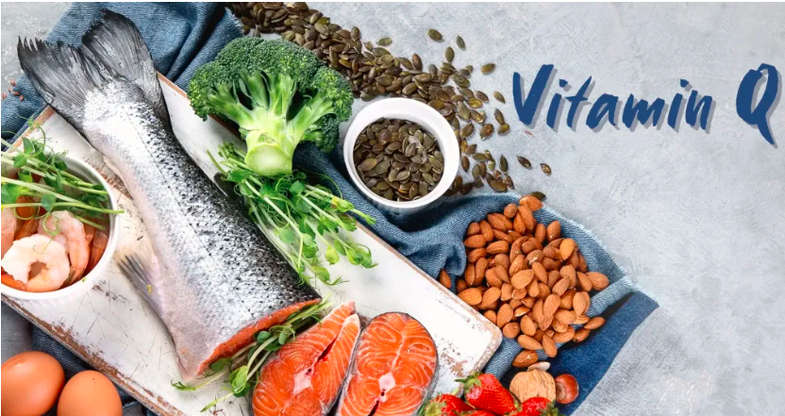
Vitamin Q is found mainly in chicken, beef, and pork, with the highest concentration in liver.
High concentrations of coenzyme Q are also found in seafood, as well as in some types of fish, especially tuna, salmon, sardines, and mackerel.
This molecule is also produced by the body itself, but over time, it begins to be released less and less.
What are the daily requirements for vitamin Q?
Daily needs for vitamin Q range from 100 to 200 mg.
It is not clear that those who follow a diet rich in coenzyme Q-rich foods will be able to maintain high ubiquinone levels. As we age, for example, the liver becomes less able to convert ubiquinones from foods and assimilate them, so taking vitamin Q supplements is recommended (especially after age 50).
However, doses should not be exceeded: for adults, it is recommended to take a maximum of 50 to 200 mg of vitamin Q per day.
Since it is a fat-soluble molecule, it is best taken with a high-fat meal to allow the body to better absorb it. Some supplements combine ubiquinone with olive oil to make it more digestible.
Source: Marie Claire