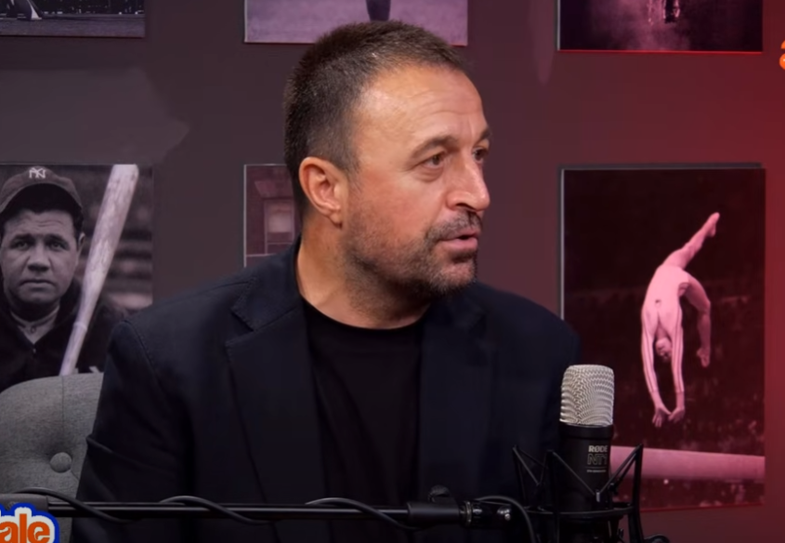
Former footballer Klodian Duro, invited to the show "Andale Sport", spoke, among other things, about the sensational expulsion from "Big Brother", comparing it to his experiences on the football field.
In an interview that took the form of a parallel between his sports career and the media clash at BBVA, Duro expressed clear disappointment in the way his case was handled within the house.
"If there had been VAR, I would never have left the house in the world. I was not allowed VAR, no appearances, nothing, no confrontation with the public, no voting. I was that strong."
As a reminder: Duro was expelled from BBVA-3 for a statement related to violence against women. During an interview, he said:
"Beware of me, because when I beat my wife, I know how you look to me?" The statement caused strong reactions in the public and on social networks. Given that in 2020 Duro was arrested for violating a protection order against his ex-wife and for threatening her, his comments within the reality show were considered unacceptable.
In "Adale Sport", he added that being expelled through a black envelope, without the opportunity for public reaction or clarification, was more severe than any other personal experience.
"This is worse because it doesn't give you the opportunity to face yourself, to show who you are. People are personified by their mistakes and I learn from mistakes, but if it's wrong to behead someone, I think this is the wrongest possible path."
His approach to “Andale Sport” seems like an attempt to reformulate the public perception of him, but not necessarily an in-depth reflection on the significance of the statements that led to his departure from the reality show. The comparison with the VAR system – a mechanism of justice in sports matches – aims to shift the focus from the serious content of the statement about violence, to the way it was managed by the production.
From one perspective, his demand for an opportunity for public confrontation and clarification is legitimate in a society that values ??reflection and rehabilitation. However, the way he frames this demand, with notes of self-justification and portraying himself as a “victim” of an unfair process, risks normalizing an extremely serious topic: violence.
Instead of emphasizing the weight and responsibility of his words, Duro tries to gain sympathy through sports analogies and a lack of “views.” This approach, to many, seems like evasion of responsibility rather than honest reflection.
Suggested articles: