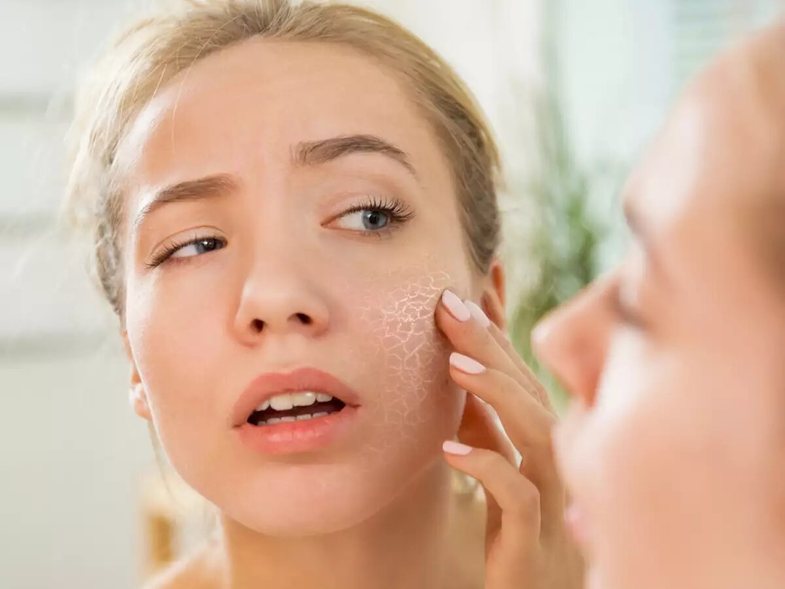
As the air temperature drops, so do the humidity levels, so your skin dries out.
Combining the humidity with strong winds and the heat of the air-conditioned environment (both destroy your protective barrier, making it harder for the skin to retain moisture), the risk of skin dryness, redness and cracking increases. And if you're prone to eczema or rosacea, winter weather can make your skin worse.
It doesn't matter what skin type you have, even those with oily skin feel the effects when you raise the temperature of the room with air conditioning.
"From the cold, your skin tries to conserve heat by constricting the blood vessels, which causes the skin to dry out in the outer layers," explains New York dermatologist Debra Jaliman.
This makes the skin look dry and dull.
But you can make sure your skin stays soft and hydrated all season long—here's how to prevent dry skin during the winter months.
Signs of dry skin
There are a few signs that will tell you if you need to add an extra layer of hydration to your routine.
"Dry skin feels shriveled, itchy and may look red or pink, especially after cleansing," says dermatologist Azadeh Shirazi. "You may also notice more pronounced cracks, lines and wrinkles."
According to Dr. Shiraz, dry skin is also more prone to irritation and inflammation, which can lead to cracks or fissures in the skin, especially on the hands and lips.
How to prevent dry skin
Keep skin covered when outside in the cold.
Wear a scarf, hat, gloves, etc. Wind combined with cold temperatures can quickly dry out exposed skin. Also, you should wear natural materials like cotton, says Dr. Jaliman—synthetic ingredients can cause itching and irritation to sensitive skin, drying it out.
Avoid long, hot showers and baths
These two elements destroy the lipid layer of your skin.
"Keep the water temperature lukewarm and the duration under five minutes," advises Dr. Marchbein. Wipe the skin with a cotton towel and immediately apply body cream while the skin is still wet for maximum absorption.
Limit the use of skin care products with harsh active ingredients
Acne medications and anti-wrinkle serums with powerful ingredients like retinol can have adverse effects, says Dr. Marchbein.
If retinol feels like it's drying out your skin, you can choose retinol alternatives like bakuchiol or vitamin C. If that's still not enough, use Dr. Marchbein applying moisturizer before and after active products.
Buy products with the right active ingredients
Ceramides help create a strong shield and maintain the necessary moisture in the skin, says Dr. Marchbein. Meanwhile, probiotics and prebiotics can increase the natural production of ceramides and balance the skin's pH (two essential elements for a healthy barrier), says dermatologist Whitney Bowe, MD.
Change moisturizers. Replace your light creams with ones that have ingredients like shea butter for more moisturizing results.
Swap your tinted facial cleanser for a basic cream formula
Foaming cleansers often contain drying ingredients called surfactants, which damage your skin's barrier.
Apply moisturizer on wet skin. Ideally within a minute of getting out of the shower to combat dryness, says Dr. Marchbein.
"And if you're sensitive, avoid scented formulas, as they can be dehydrating."
Treat your hands with ingredients like glycerin and chamomile.
They are among the most important areas to treat and these ingredients are up to the task.
"Glycerin is a substance that draws water from the air to the outer layer of the skin and serves as a protective layer that helps prevent moisture loss," explains Dr. Jaliman.
Chamomile, on the other hand, is great for dry skin and eczema because of its anti-itching and anti-inflammatory properties, she adds.
Suggested articles: