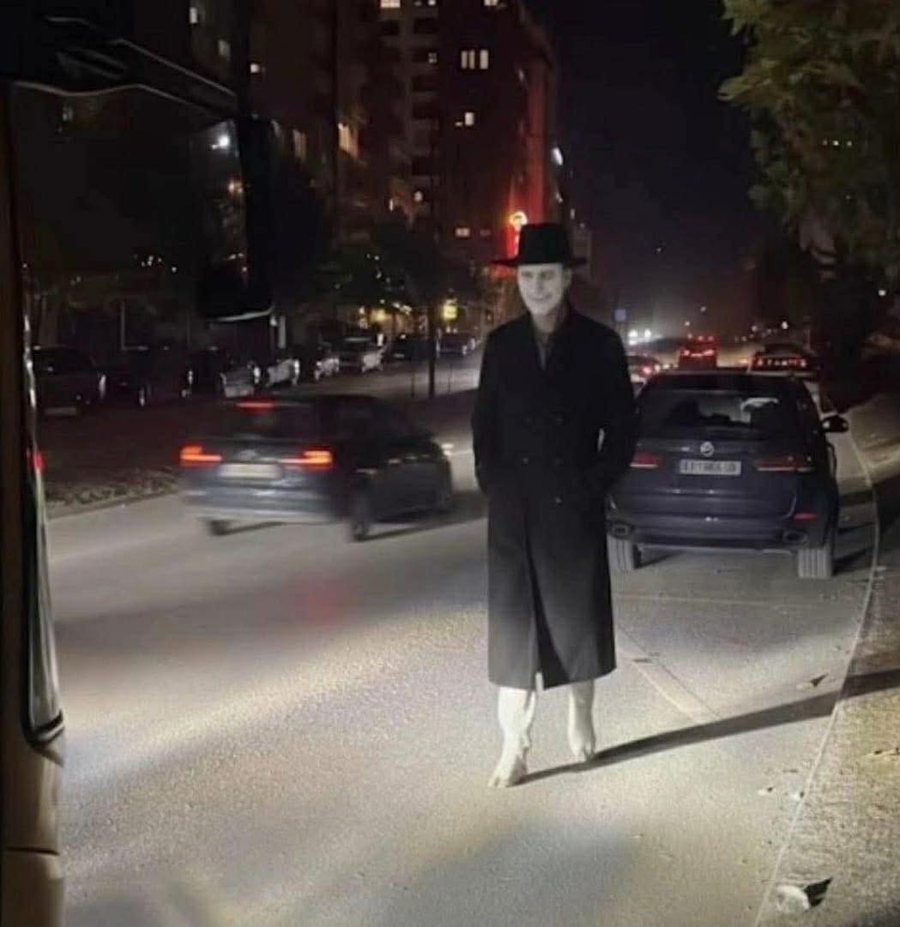
Dozens of media outlets in Kosovo and Albania managed to uncover a new phenomenon on the streets of Kosovo: a goat-legged ghost walking freely through Pristina. A strange image, shocking enough to attract attention and convincing enough not to raise a simple question: is it real?
What was missing, once again, was a fundamental element of journalism: verification. A photo generated through artificial intelligence was distributed and treated as news, without context, without a clear source, and without any professional filter.
Following recent reports, the Kosovo Press Council reacted by clarifying that the so-called "Ghost of Pristina" was, in fact, a photo generated through Artificial Intelligence (AI), distributed and treated as news without any prior verification.
However, the damage had already been done: citizens were concerned, and we witnessed another example of how easily fake content can gain news status, simply by publishing it quickly and without any questions.
This case speaks not only to the ever-increasing power of technology, but also to the lack of professionalism in some parts of the media. At a time when AI is increasingly capable of creating convincing photos/videos, the minimum expectation from the media remains the same: to stop, ask, and verify.
Because when imagination is reported faster than reality, reality remains silent.