Credits: Museum of Science and Industry, Chicago
For a young miner it was a typical working day at the Eureka Creek site in Canada, before something unexpected struck.
What he found was described by paleontologist Grant Zazula as “one of the most incredible ice age mummified animals ever discovered in the world.” The miner had found the body of a 35,000-year-old mammoth baby.
"It's perfect and beautiful," paleontologist Grant Zazula told him. "It has a snout. It has a tail. It has small ears."
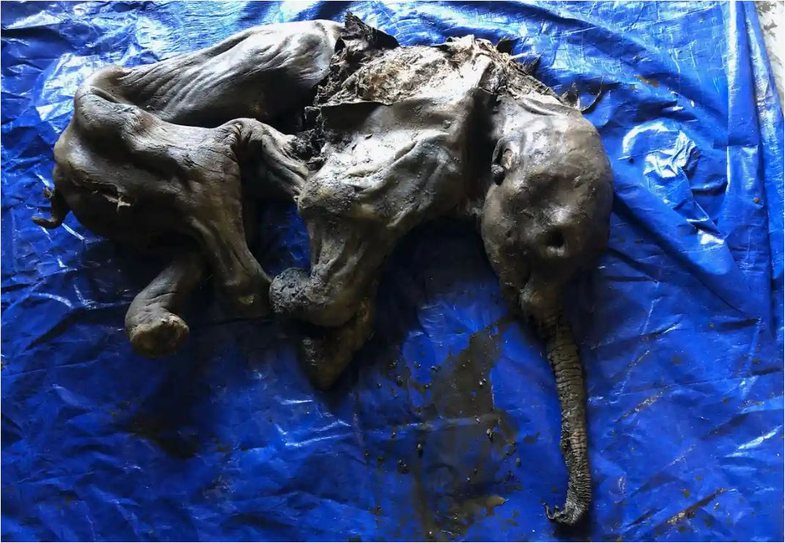
The almost perfectly preserved condition suggests that the little mammoth may have remained trapped in the mud before ending up frozen in permafrost during the ice age (permafrost - a thick subsoil that remains frozen all year round; occurs mainly in the polar regions).
Zazula described the find as "the most important discovery in paleontology in North America." With most of the skin and hair intact, officials said the discovery ranks as the most complete mummified mammal found on the continent.