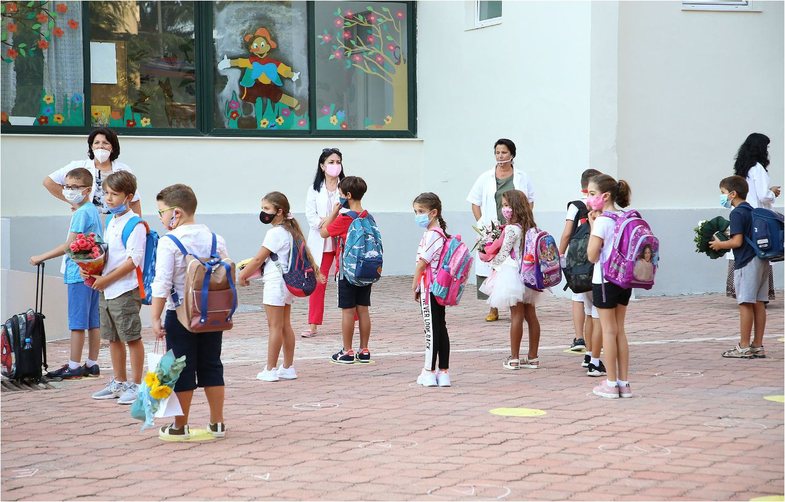
Elementary school-age children produce about four times fewer aerosol particles when they breathe, talk, or sing than adults, which may help explain why they are less likely to spread Covid.
Various studies have suggested that young children are less susceptible to Covid infection than adults and, despite having a similar amount of virus in their nose and throat, appear to transmit it to fewer people if infected.
One reason this may be the case is that the size and shape of the lungs and their airways - mean that they emit fewer small droplets called aerosols while breathing and talking. These particles can stay in the air, especially indoors such as classrooms, so fewer aerosols may mean that people are less likely to become infected if they stay in these spaces.
The results, published in the Journal of the Royal Society Interface, suggested that shouting produced more particles, followed by singing, speaking, and then breathing.